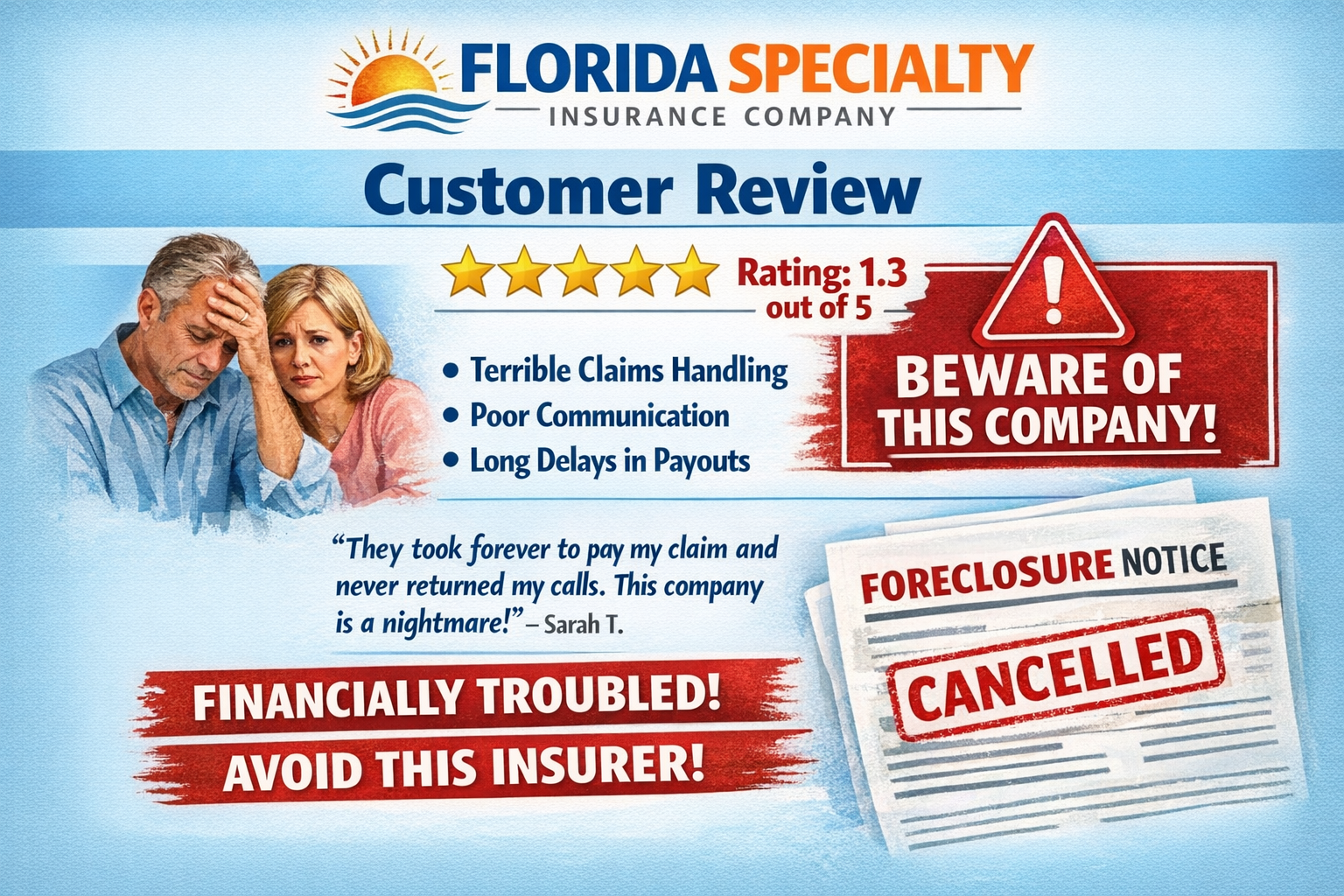
Florida Specialty Insurance Company has been part of the Florida insurance market for homeowners who need coverage in a high risk state. Moreover, many people look for reviews of regional insurers because Florida weather creates unique insurance challenges. Therefore, it helps to examine how a company handles coverage, pricing, claims, and customer support before making a decision. Florida homeowners often face hurricanes, wind damage, water losses, and rising premiums. As a result, buyers need clear information and realistic expectations about any insurer they consider. In addition, a review should look at both policy features and the overall customer experience. Florida Specialty Insurance Company drew attention over the years because it served a market that larger carriers sometimes approached cautiously. Consequently, many policyholders wanted a provider that understood local risks and local property conditions. Overall, a careful review can show whether Florida Specialty Insurance offered meaningful value for homeowners in Florida.
Florida Specialty Insurance Company Overview
Florida Specialty Insurance Company operated as a property insurer focused on homeowners in Florida. Moreover, the company aimed to serve residents in a state where insurance needs are often complex. Florida homes face tropical storms, hurricanes, heavy rain, and sudden water damage. Therefore, insurers in the state must build products around serious and frequent weather risks. Florida Specialty Insurance tried to meet that demand with coverage options designed for local homeowners. In addition, the company became known as a regional name rather than a national giant.
Many Florida homeowners turned to smaller regional insurers when national carriers tightened underwriting rules. As a result, Florida Specialty Insurance gained attention among people who needed alternatives in a difficult market. The company worked in an environment where policy availability could change quickly. Moreover, state regulations, storm losses, and reinsurance costs often shaped insurer decisions. Florida Specialty Insurance entered a market where homeowners wanted both accessibility and reasonable protection. Consequently, its role in the state insurance landscape mattered to buyers who had limited options.
A review of Florida Specialty Insurance should also recognize the realities of the Florida insurance market. First, insurers in the state often deal with pressure from catastrophic weather losses. Second, premium volatility can affect both customers and insurers over time. Therefore, any company operating in Florida must balance affordability with financial responsibility. Florida Specialty Insurance attempted to offer coverage in a demanding environment with many moving parts. Overall, the company fit into a segment of the market that focused on local property risks and homeowner needs.
Coverage Options for Florida Homeowners
Florida homeowners usually want coverage that protects both the structure of the home and personal belongings. Moreover, they often need liability protection and loss of use coverage as part of a complete policy. Florida Specialty Insurance generally focused on standard homeowners insurance needs within the state. Therefore, buyers could look for protection against covered perils such as fire, theft, and certain forms of storm related damage. However, policy terms always mattered because Florida risks can involve separate rules for wind and water losses. In addition, homeowners needed to read exclusions and deductibles very carefully before choosing a policy.
Windstorm coverage stands out as a major issue for homes in Florida. As a result, many homeowners paid close attention to hurricane deductibles and roof related limitations. Florida Specialty Insurance policies likely reflected common Florida market practices in handling storm risk. Moreover, buyers often needed to understand whether water damage came from internal plumbing issues or rising floodwaters. Flood insurance usually requires a separate policy, and many homeowners mistakenly assume a standard policy covers flood losses. Therefore, careful review of policy language remained essential for anyone considering coverage in Florida.
Additional living expenses and liability coverage can also shape the value of a homeowners policy. For example, a family may need temporary housing after a major covered loss. In that case, adequate loss-of-use protection can make a big difference during recovery. Likewise, personal liability coverage can protect homeowners if someone gets injured on the property. Furthermore, optional endorsements may help expand protection for higher-value items or special risks. Overall, Florida homeowners needed to compare not only the base policy but also the practical usefulness of the coverage package.
Pricing, Discounts, and Policy Value
Florida insurance pricing often runs higher than homeowners expect. Moreover, carriers must account for hurricanes, repair costs, legal trends, and reinsurance expenses when setting premiums. Florida Specialty Insurance operated in that same pricing environment, so affordability likely varied by location and property condition. Therefore, homeowners near the coast or in high-risk wind zones often faced steeper rates. Older roofs, prior claims, and outdated systems could also raise premiums. As a result, buyers needed to weigh cost against the actual protection offered by the policy.
Discounts can improve policy value when a company rewards lower-risk features. For instance, homeowners may save money by installing storm shutters, impact-resistant materials, or updated roofing systems. Likewise, alarm systems and home safety devices sometimes support lower premiums. Florida Specialty Insurance, like many insurers, may have considered mitigation features when pricing a home. Moreover, bundled savings or payment-related discounts can sometimes make coverage more manageable. However, the biggest savings often come from strong home construction and documented wind mitigation improvements.
Policy value depends on more than the monthly or annual premium. Instead, homeowners should compare deductibles, coverage limits, exclusions, and responsiveness to claims. A cheaper policy may look attractive at first, but it may provide less helpful protection after a loss. Therefore, smart buyers examine how much they would pay out of pocket after a storm or water event. In addition, they should review whether the dwelling coverage matches rebuilding costs in their area. Overall, Florida Specialty Insurance needed to offer a balance between price and meaningful protection in a very demanding market.
Claims Process and Customer Service Review
Claims service often defines how homeowners feel about an insurance company. After all, policyholders buy insurance for the moment when damage actually happens. Florida Specialty Insurance customers likely expected a clear claims process, especially after severe weather. Therefore, speed, communication, and fairness would have played major roles in customer satisfaction. In addition, a company must guide policyholders through documentation, inspections, and repair estimates with as little confusion as possible. Good claims handling can reduce stress during one of the hardest moments a homeowner may face.
Florida storm claims can become complicated very quickly. For example, a hurricane may damage roofs, windows, fences, and interior areas all at once. As a result, policyholders need prompt instructions on what to document and what emergency steps to take. Florida Specialty Insurance had to operate in a market where claim volume could spike after a major event. Moreover, customers often judged the company by how well it handled those peak periods. Timely communication, organized adjuster support, and clear explanations could strongly influence overall reviews.
Customer service matters before and after a claim. For instance, homeowners may call with billing, coverage, or renewal questions. In those moments, helpful representatives can build trust and reduce frustration. Likewise, slow callbacks or unclear answers can damage confidence even when the policy itself looks fine. Therefore, any review of Florida Specialty Insurance should consider both routine service and post-loss support. Overall, strong customer service can improve the value of a policy, while weak service can overshadow competitive pricing.
Financial Strength and Company Reputation
Financial strength remains one of the most important factors in any insurance review. Moreover, homeowners need confidence that an insurer can pay claims after large-scale disasters. Florida Specialty Insurance operated in a state where storms can result in sudden, enormous claim costs. Therefore, financial stability always mattered as much as policy design. In addition, rating agencies and market observers often help consumers assess an insurer’s ability to handle risk. A company may offer appealing coverage, but financial resilience determines whether that coverage holds up under pressure.
Company reputation also develops through customer experiences, professional reviews, and market performance. As a result, homeowners often research complaint trends, claim satisfaction, and regulatory history before buying a policy. Florida Specialty Insurance attracted attention because regional insurers in Florida often face intense public scrutiny. Moreover, any insurer serving high-risk homes must maintain trust while managing difficult underwriting conditions. A solid reputation can reassure homeowners who already feel anxious about storms and rising costs. Conversely, negative experiences can spread quickly and shape public opinion for years.
Florida homeowners should always look at reputation in context. First, even strong insurers may receive complaints after catastrophic events because emotions and losses run high. Second, a difficult market can strain service systems across the industry, not just at one company. Therefore, consumers should compare patterns rather than rely on a single review. In addition, they should consider financial ratings, state records, and independent customer feedback together. Overall, Florida Specialty Insurance needed both financial capacity and a dependable reputation to stand out in the Florida market.
Final Verdict on Florida Specialty Insurance
Florida Specialty Insurance Company occupied a meaningful place in a challenging state insurance market. Moreover, it appealed to homeowners who wanted a regional insurer familiar with Florida property risks. The company appeared to focus on practical homeowners coverage in an environment shaped by hurricanes and weather uncertainty. Therefore, its value depended heavily on the details of policy terms, pricing, and service performance. In addition, homeowners needed to compare coverage carefully because Florida insurance rules and exclusions can be very specific. Overall, the company represented an option that better met the needs of some Florida property owners than others.
Buyers considering a company like Florida Specialty Insurance should always look beyond the headline premium. For example, they should examine deductibles, roof limitations, water damage wording, and available endorsements. Likewise, they should ask how the company handles claims after major storms and whether support remains responsive during peak claim periods. A lower price can help, but a poor claims experience can quickly erase that benefit. Therefore, careful comparison shopping remains the best approach for any Florida homeowner. In the end, insurance value comes from both affordability and dependable real-world protection.
Florida remains one of the toughest insurance markets in the country. As a result, no homeowner should choose a policy without reviewing financial strength, service reputation, and coverage details. Florida Specialty Insurance Company reflected many of the strengths and challenges common to regional Florida insurers. Moreover, it served a market where consumers often needed flexible options when choices felt limited. A good fit depended on the home’s condition, location, budget, and risk tolerance. Therefore, homeowners needed to match the policy to their own property and long-term needs. Overall, Florida Specialty Insurance could be worth consideration for people who want a Florida-focused insurer. Still, careful review and side-by-side quotes always offered the smartest path forward.
Conclusion
Florida Specialty Insurance Company earned attention because it operated in one of the most demanding homeowners insurance markets in the country. Moreover, the company appealed to residents who wanted a provider with a local focus and an understanding of Florida-specific risks. Coverage options likely met many standard homeowner needs, yet buyers still had to examine deductibles, exclusions, and storm-related terms very closely. Therefore, the real value of any policy depended on how well it matched the property, the location, and the homeowners expectations.
Pricing may have looked competitive in some cases, although premium levels in Florida often remain high across the board. In addition, discounts for mitigation features and safer home construction could improve the policy’s value for some homeowners. Claims handling and customer service remained major factors because fast communication and fair support often matter most after a loss. Financial strength and market reputation also played a central role, since homeowners need confidence that an insurer can perform under pressure. Overall, Florida Specialty Insurance fits the profile of a regional insurer trying to meet serious local needs in a volatile market. Consequently, any homeowner considering Florida Specialty Insurance should carefully compare policy details, read the fine print, and review the company’s broader reputation before making a final decision.