Texas is well-known for its vast landscapes, vibrant culture, and unique approach to state regulations. Among the critical regulations every Texan must understand are the insurance requirements set by the state. Whether you’re a driver, homeowner, or just looking after your health, having the right insurance coverage isn’t just recommended—it’s often the law. This article explores the essential insurance requirements in Texas, ranging from auto and property insurance to health coverage, and outlines the consequences of failing to comply. Required Insurance In Texas must be explored.
Understanding the Basics
Insurance serves a dual purpose in Texas: it protects individuals from unexpected financial burdens and ensures that others are not left uncompensated due to someone else’s actions. The state mandates certain types of insurance to safeguard the interests of both residents and the broader community. Understanding these requirements is crucial, whether you’re a lifelong Texan or a recent transplant.
For most people, required insurance in Texas falls into three main categories: auto, property, and health insurance. Each category has its own laws and minimum standards that residents must meet. These requirements are designed to offer a baseline level of protection, while allowing individuals the flexibility to purchase additional coverage as they see fit.
It’s also important to note that insurance laws in Texas are subject to change and can vary depending on your specific circumstances. For example, different requirements may apply based on the type of vehicle you drive, the value of your home, or your employment status. Staying up-to-date with the latest regulations helps you remain compliant and protected.
Minimum Auto Insurance Requirements for Texas Drivers
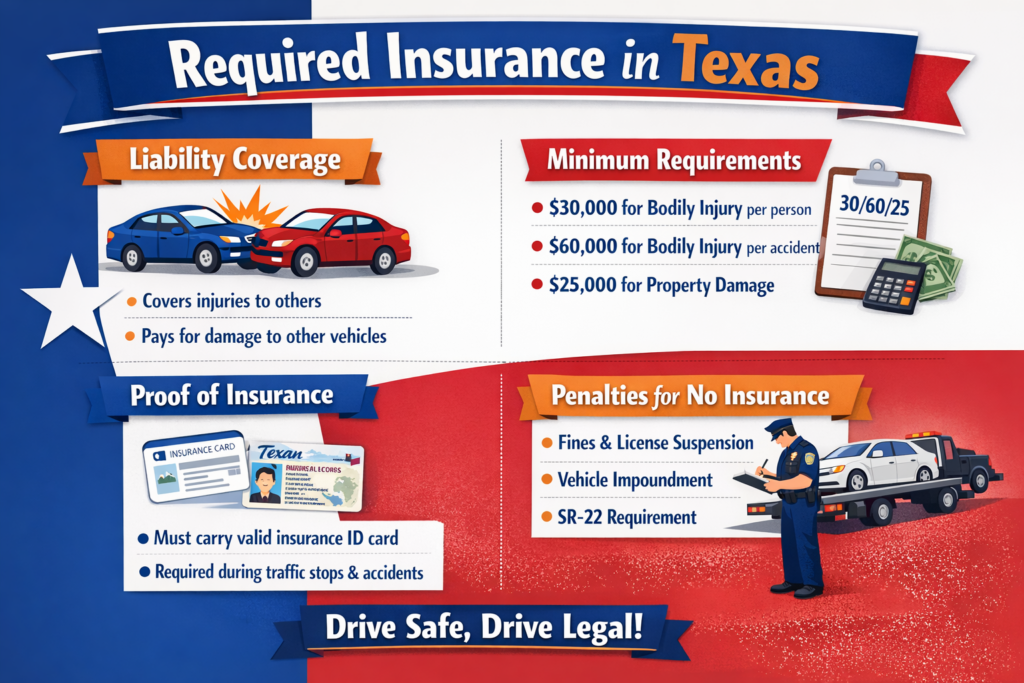
Driving in Texas without the proper insurance is not only risky—it’s illegal. The state requires all drivers to carry liability insurance as a minimum. This insurance covers the costs of injuries and damages to other people or their property if you are at fault in an accident. Specifically, Texas law sets minimum coverage amounts at $30,000 for each injured person, up to $60,000 per accident, and $25,000 for property damage per accident. This is commonly referred to as 30/60/25 coverage.
While liability insurance covers damages you cause to others, it does not pay for your own injuries or vehicle damage. Many Texans choose to purchase additional options such as collision, comprehensive, or uninsured/underinsured motorist coverage. These extra protections are not required by law, but they can provide peace of mind and financial security in the event of an accident.
Proof of insurance must be carried at all times when driving and shown to law enforcement during traffic stops or after an accident. Insurance companies are also required to report policy information to the Texas Department of Motor Vehicles, so attempts to go without coverage are easily detected. Failure to maintain the required coverage can result in severe penalties, including fines and license suspension.
Homeowners and Property Insurance Laws in Texas
Unlike auto insurance, homeowners insurance is not required by Texas law. However, if you have a mortgage, your lender will almost certainly require you to carry a policy to protect their interest in your property. This coverage typically includes protection against common perils such as fire, theft, vandalism, and certain natural disasters. The specific terms and minimum coverage amounts will depend on your lender’s requirements and the value of your home.
Even if you own your home outright, purchasing homeowners or property insurance is a wise decision. Texas is prone to extreme weather events, including hurricanes and hailstorms, which can cause significant property damage. Some natural disasters, such as floods, are not covered by standard policies and require separate flood insurance, often mandated if you live in a designated flood zone.
It’s also worth noting that condominium owners and renters have their own insurance needs. Condo owners may need a policy that covers the interior of their unit, while renters are encouraged—but not required—to have renters insurance to protect their personal belongings. Overall, while state law may not demand homeowners insurance, practical considerations and lender requirements make it a virtual necessity for most Texans.
Health Insurance Mandates and Options in Texas
The landscape for health insurance in Texas has evolved significantly since the introduction of the Affordable Care Act (ACA). While there is no state-level mandate requiring individuals to have health insurance, Texans are encouraged to obtain coverage to protect themselves from the high costs of medical care. The federal government no longer penalizes individuals for not having health insurance, but going without it can still have serious financial consequences.
Texans have several options for health insurance coverage, including employer-sponsored plans, individual plans purchased through the federal marketplace, and government programs such as Medicaid or the Children’s Health Insurance Program (CHIP). Each option varies in terms of coverage, cost, and eligibility. Those with lower incomes may qualify for subsidies or programs that reduce the cost of insurance.
For employers, Texas follows federal guidelines under the ACA. Companies with 50 or more full-time employees are required to provide health insurance or face penalties. Smaller businesses and individuals must weigh their options carefully, considering their health needs and budget. While not strictly mandated by the state, maintaining health insurance is strongly advised to avoid unexpected out-of-pocket expenses.
Penalties for Lack of Insurance
Failing to maintain required insurance in Texas can lead to serious repercussions. For auto insurance, drivers caught without proof of coverage face initial fines of at least $175, but repeat offenders can see penalties rise to $1,000 or more. Additional consequences include impoundment of your vehicle, suspension of your driver’s license, and increased insurance premiums moving forward.
For homeowners, the main risk of not having insurance is financial. If your property is damaged or destroyed and you lack coverage, you’ll be responsible for all repairs and replacement costs out-of-pocket. If you have a mortgage and let your policy lapse, your lender may purchase a policy on your behalf—often at a much higher cost and with less favorable terms.
Although there’s no legal penalty for not having health insurance in Texas, the financial risk is significant. One major illness or accident can result in unmanageable medical bills, leading to debt or even bankruptcy. Additionally, those who go without insurance may face limitations in accessing care, as some providers require proof of coverage for non-emergency services.
Insurance isn’t just a regulatory box to check—it’s a critical layer of protection for you, your family, and your community. In Texas, understanding and complying with required insurance laws ensures you meet legal obligations and are prepared for life’s unexpected challenges. From the roads to your home to your health, the right insurance coverage offers peace of mind and financial security. Stay informed, review your policies regularly, and make sure you’re covered; it’s one of the smartest decisions you can make as a Texan.